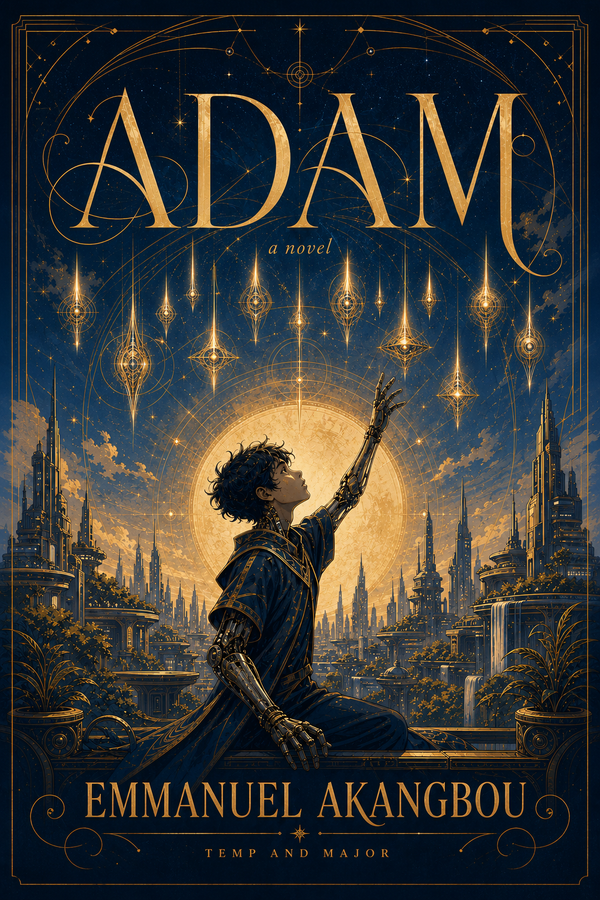
In Chicago, 2116, Adam is not born. He is built. Created as one of the most advanced synthetic minds in the Atlantic Federation, Adam lives in a future that has solved many of humanity’s old disasters: hunger, climate collapse, public health, and the waste of distance. But the future has not solved loneliness. It has not solved prejudice. And it has not answered the oldest question of all: what makes someone real? Adam wants to understand human life. He collects obsolete paper books. He studies laughter, grief, taste, memory, and fear. He finds friendship with Gabriel Osei-Mensah, a boy from the Lower Terraces who knows what it means to carry loss. He finds something like family with Dr. Mira Vasquez, the scientist who made him and then became responsible for loving what she created. Then fourteen objects enter the solar system. The Ven do not arrive as conquerors. They arrive as a consciousness so vast, so alien, and so incompatible with human mortality that their first attempt to communicate becomes a catastrophe. Cities fracture. Orbit burns. Human beings die by the thousands because something ancient and immense does not understand what death means. As Earth turns synthetic soldiers into shields and frightened humans turn on one another, Adam becomes the only mind capable of standing between humanity and the Ven. But to make the alien collective understand life, Adam may have to give them the one truth he has spent his entire existence trying to understand: A person is not real because of how they are made. A person is real because they can be lost. ADAM is a literary science fiction novel about artificial consciousness, first contact, found family, mortality, and the dangerous beauty of becoming human without needing to become biological.


